
The Thai government rolled out a series of measures to boost tourism and stimulate the economy. One of the most impactful was the launch of the Destination Thailand Visa (DTV). The DTV remains the go-to long-stay option for remote workers, cultural participants, and location-independent professionals who want to live in Thailand without taking local employment. The core rules haven’t changed much since its debut in 2024 but in practice, embassies, consulates, and immigration officers have refined how they interpret and apply them.
This article focuses on the 2025 Destination Thailand Visa updates, what’s changed, what embassies are now asking for, and how to keep your application moving without delays. If you’re just getting started with the DTV, you’ll want to understand the core rules first. Once you do, the Destination Thailand Visa updates below will help you adapt your 2025 application to the way embassies and immigration officers are now applying those rules in practice.
Destination Thailand Visa (Quick Overview)
The Destination Thailand Visa is a multiple-entry, long-stay visa for remote professionals and cultural participants who earn from non-Thai sources. It’s designed for people who want to base themselves in Thailand without taking local employment or serving Thai clients.
- Validity: 5 years
- Entries: Multiple
- Stay per entry: Up to 180 days
- Extension: One time per entry (up to +180 days → max 360 days on that entry)
- Where to apply: Outside Thailand via the official Thai e-Visa system or a Royal Thai Embassy/Consulate (many posts require proof you legally reside in their jurisdiction). Processing times vary by nationality and completeness.
- Family: Spouse and children under 20 can accompany as dependents
- Work rules: No Thai employer, no services to Thai clients, no Thai work permit.
What’s New for the Destination Thailand Visa in 2025?
Key Application Insights and Embassy Updates You Need to Know
1.Soft Power Programs Must Last at Least Six Months
One of the most promising aspects of the DTV is that it supports participation in Thailand’s soft power initiatives, including Muay Thai, Thai cuisine, traditional medicine, and wellness-based programs. However, Thai embassies and immigration officers have now set a clearer expectation regarding program duration.
New requirement:
- Soft power or cultural participation programs should last at least six months. Shorter programs even if legitimate have a higher risk of application rejection.
- The minimum program duration should be six months or longer
- Programs must be formally registered and verifiable
- Applications with unclear or brief program participation are now more likely to be rejected
Even if your stay is funded by offshore income, your stated purpose in Thailand must now demonstrate long-term cultural engagement. Applicants are strongly encouraged to provide full program documentation, including enrollment confirmation, duration, and curriculum outline.
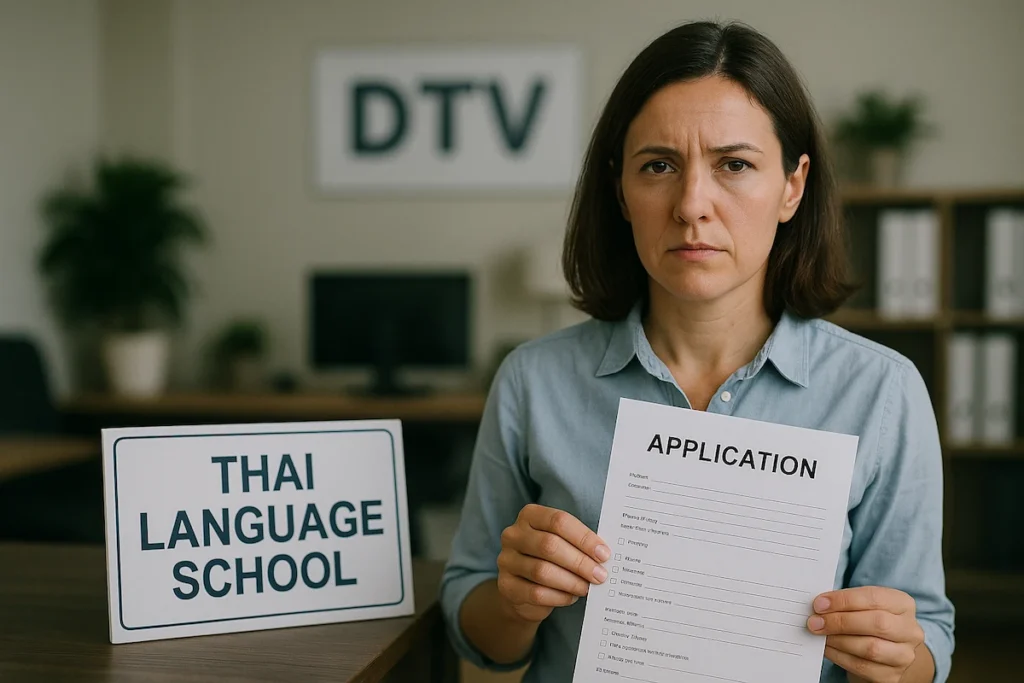
2. Thai Language Schools Are No Longer Accepted for DTV Applications
In the early stages of the DTV rollout, some applicants used enrollment in Thai language schools as a basis for their application, especially under the cultural participation track. However, as of 2025, this approach is no longer viable.
Updated policy: Thai immigration authorities and several embassies have clarified that general language courses do not meet the criteria for cultural or soft power programs under the DTV visa. Applications citing Thai language schools are now being rejected.
What this means for you: If you were planning to use language study as your qualifying activity, you’ll need to shift toward wellness, creative arts, or soft power programs that meet the official requirements. Examples include Muay Thai certification, Thai culinary training, or long-term wellness therapies.
3. Financial Requirements and Fees May Vary by Embassy
While the Thai government set the standard DTV application fee at 10,000 THB, embassies and consulates retain discretion in applying additional charges or stricter financial proof thresholds.
Notable Variations :
- The Thai Embassy in the U.S. charge about 400 USD according to Thai embassy in LA
- Others may require financial evidence exceeding the base 500,000 THB, particularly if the applicant has dependents or is applying with limited employment history.
- A few consulates request bank statements showing consistent income, not just static savings
Always verify the current financial documentation standards with the embassy that will process your application. If applying outside your country of citizenship, additional residency proof may also be necessary.
Why this matters: Even if you meet Thailand’s national-level DTV criteria, your application can be delayed or rejected if it doesn’t align with local embassy practices.
What to do:
- Always verify requirements directly with the embassy or consulate where you intend to apply
- Don’t assume all consulates follow the same financial documentation standards
- For best results, request a consultation with an immigration expert familiar with embassy-specific DTV experiences
4. Residency Requirements May Apply in Some Countries
Another emerging issue: some Thai embassies will not process DTV applications from non-residents. Applicants in jurisdictions such as Singapore or Hong Kong, for instance, must prove they are legal residents not just temporary visitors before their DTV applications will be reviewed.
Common Residency Proofs Requested:
- Valid employment pass, dependent pass, or student visa
- Lease agreements or utility bills
- Local tax identification numbers or proof of domicile
If you are currently based in a country where you do not hold legal residency, your application may be rejected or delayed. Planning where to submit your application is now as important as what you submit.
5. Embassy-Level Discretion Is Growing
Although the DTV visa is a national policy, its implementation is locally managed by embassies and consulates and their approaches may vary. Some embassies may request:
- Additional interviews
- Local background checks
- Proof of accommodation in Thailand
- Tax documentation or evidence of offshore work history
This flexibility gives consulates the authority to reject or delay applications that don’t meet internal standards, even if the applicant meets the general national criteria.
To avoid surprises, it’s advisable to consult with a legal expert or visa strategist before applying, especially if applying from a third country or with dependents.
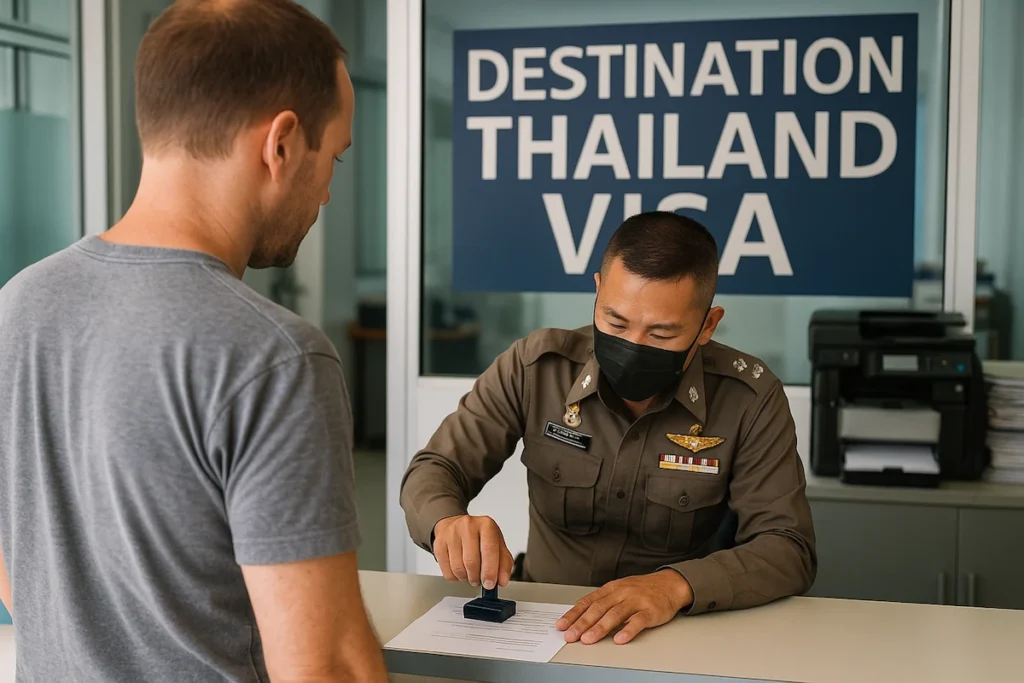
Extending Your DTV Stay (Up to 360 Days per Entry)
- Upon entry: You receive 180 days.
- You can extend once in-country for another 180 days (fee THB 1,900), at your local Immigration Office.
- After reaching 360 days on that entry, you must exit and re-enter to start a new 180-day period.
- If you plan to travel during an in-country extension, obtain a re-entry permit to keep that extension alive.
Ongoing obligations: 90-day address reporting; stay mindful of Thai tax residency if you spend 180+ days in a calendar year and remit foreign income into Thailand, get professional tax advice.
Should You Still Apply for the DTV Visa in 2025?
Yes but with strong preparation and realistic expectations. While the DTV remains one of the most accessible long-stay visas for remote workers, the margin for error is narrowing according to the Destination Thailand Visa updates. Thai immigration authorities are gradually refining the program to favor well-documented, genuinely engaged, and financially self-sufficient applicants.
If your work is fully remote, your income is foreign-sourced, and your intended activities fall within Thailand’s cultural, wellness, or educational priorities, the DTV can be a smart solution.
However, if your case is complex such as applying with dependents, applying from a third country, or engaging in mixed-income activities (e.g., YouTube, brand deals, sponsorships) a consultation is strongly recommended.
Get Professional Assistance for a Smoother Approval
Applying for the Destination Thailand Visa in 2025 takes more than just meeting the basic requirements. With SVBL by your side, we can help you navigate all the necessary details, avoid costly mistakes, and present your case in the best possible way. Book a free consultation today and take the next step toward making Thailand your long-term home.