For years, remote workers, freelancers, and digital nomads in Thailand lived in a legal gray zone. Many relied on tourist entries, education visas, or repeated border runs. Thailand simply had no long-stay visa built for people who earn their income from abroad.
The DTV workcation visa changes that. It gives remote employees, online business owners, consultants, and freelancers a legal way to live in Thailand while working for companies or clients based elsewhere.
It is not, however, an easy lifestyle visa or a guaranteed approval. Thai immigration enforcement keeps getting more digital and more consistent, which means a sloppy or thin application now stands out and gets flagged. And a well-documented application is now essential for anyone planning to use Thailand as a long-term remote work base.
What is the DTV Workcation Visa?
The DTV workcation visa is designed for individuals whose income is entirely earned from companies or clients based outside of Thailand. It acts as a legal bridge, permitting you to live in the country while performing services for overseas employers.
Core Stay Rules and Deadlines
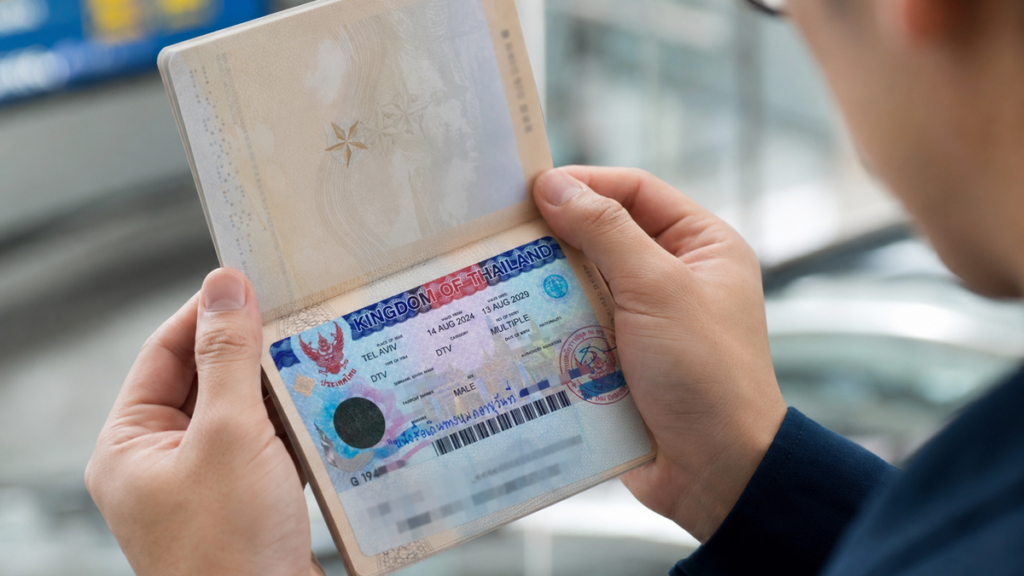
- Five Years of Validity: The visa gives you a five-year window to live in and travel out of Thailand. It is a multiple-entry visa, meaning you can leave and return as many times as you like.
- 180 Days Per Entry: Every time you pass through border control, you receive a 180-day stay stamp.
- One In-Country Extension: You can extend your stay once per entry for an additional 180 days at a local Thai Immigration office. The extension costs a standard 1,900 THB fee. This allows you to stay for nearly a full year before you need to fly out and return to reset the stamp.
- Strict Employment Limits: This visa strictly prohibits local employment. You cannot work for a Thai company, provide localized services to Thai clients, or apply for a traditional Thai work permit under this status.
Who is Eligible for the DTV Workcation Track?

To qualify for the DTV workcation visa, you must meet clear personal and financial baselines. Because this pathway does not require a local Thai corporate sponsor, embassies use these criteria to ensure you are entirely self-sufficient.
First, the primary applicant must be at least 20 years old at the time of submission and hold a clean immigration history with no record of blacklisting or serious overstays in Thailand.
Second, you must prove financial stability by demonstrating personal liquid savings of no less than 500,000 Thai Baht (THB), or the foreign currency equivalent.
The Financial Rule
The financial requirement for the DTV workcation visa is simple on paper, but the way it is reviewed has become stricter. In the early stage of the visa rollout, some consulates accepted a single-day bank balance showing the required amount. That approach is now much weaker.
To prevent applicants from temporarily moving money into an account just to pass the check, many embassies now expect bank statements covering the previous three to six months. The balance should remain consistently above the 500,000 THB threshold during the statement period.
Applicants should also avoid relying on assets that are not clearly liquid. Cryptocurrency portfolios, stock holdings, investment accounts, or illiquid wealth management products may not be accepted. For the DTV workcation visa, the safest evidence is cash held in a verified savings or checking account under the applicant’s legal name.
Document Requirements for Remote Professionals
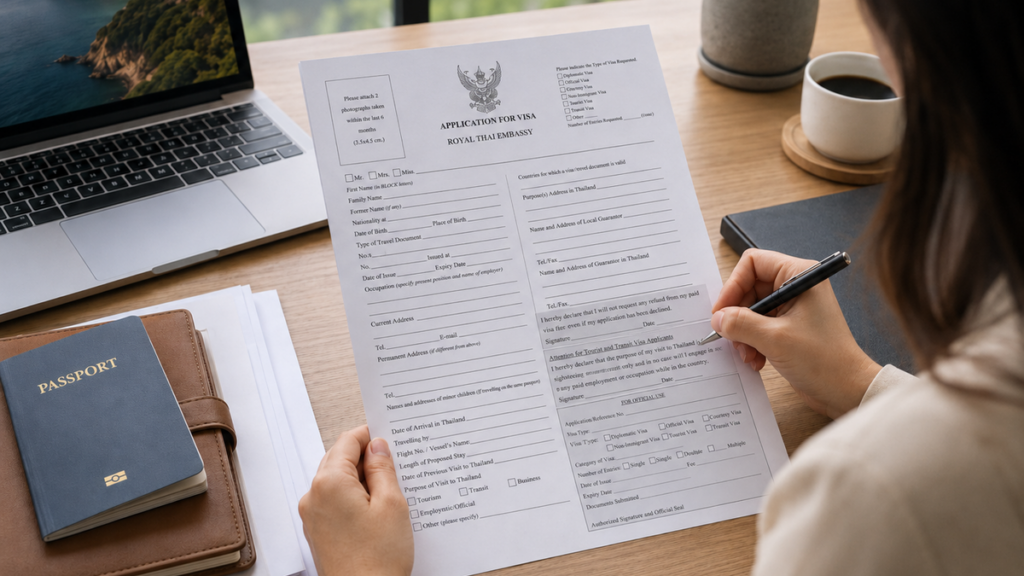
The absolute core of a successful DTV workcation visa application lies in your proof of employment. Your paperwork must clearly prove that your income originates outside of Thailand and that your professional duties can be executed entirely online.
Requirements for Remote Employees
If you are employed by a foreign company, you must submit a valid employment contract alongside a formal, signed letter from your employer’s HR department. This corporate letter must explicitly state your job title, your ongoing salary, and a clear statement confirming that you are permitted to work remotely from abroad. Consulates frequently cross-reference these letters with your recent pay stubs or personal tax returns to verify active employment.
Requirements for Freelancers and Contractors
If you operate as a freelancer, you cannot rely on a single letter. You must present a comprehensive professional portfolio. This includes active freelance contracts, a clear history of international client invoices, links to live professional websites or platforms, and bank statements showing consistent incoming payments from overseas clients.
Requirements for Digital Business Owners
If you run an online business registered outside of Thailand, you must provide your company’s formal Certificate of Incorporation, active business licenses, and recent corporate tax returns. You must also include a professional cover letter outlining your business model, revenue streams, and a clear explanation of how you manage operations remotely.
The 180-Day Rule and Tax Residency
While the DTV workcation visa solves your immediate immigration hurdles, it introduces important fiscal considerations that long-term remote workers frequently overlook.
Under Section 41 of the Thai Revenue Code, any individual who spends an aggregate of 180 days or more inside Thailand within a single tax year is legally classified as a Thai tax resident.
Historically, foreign-sourced income was only subject to Thai personal income tax if it was brought into the country in the same year it was earned. More recent guidance has tightened this position, and remitted foreign-sourced income may now be taxable for Thai tax residents. As the rules in this area continue to evolve, the current position should be confirmed with a qualified Thai tax adviser.
Spending 180 days or more in Thailand in a tax year, whether in one stay or across several, will make you a Thai tax resident. For remote workers earning substantial foreign income, the tax implications should be reviewed with a qualified Thai tax adviser.
Frequently Asked Questions
Can my family join me on a DTV workcation visa?
Yes. Once the primary applicant is approved, immediate family members can apply as dependents. This includes your legal spouse and any unmarried children under the age of 20. Each dependent must submit a separate application, pay individual consular fees, and provide official proof of relationship, such as a marriage or birth certificate. Dependents do not need to show an additional 500,000 THB bank balance.
Do I need a Thai bank account to apply?
No. You can use statements from a bank account in your home country or any international financial institution, as long as the account is in your legal name and clearly displays the required funds in a liquid format. However, if you apply for an extension inside Thailand later, local immigration offices may request to see proof of funds.
What happens if I change remote jobs while holding the visa?
Your visa remains valid for its five-year duration, but you must ensure that you always maintain active, verifiable remote employment or freelance work that complies with the visa conditions. If you apply for an in-country extension or face an immigration audit, you will be required to provide fresh documentation for your current employer or business setup.
Conclusion & Strategic Takeaway
If you are planning to base yourself in Thailand, the right question is not simply whether you qualify for the DTV workcation visa. It is whether your employment, income, savings, travel pattern, and long-term plans can withstand review.
SVBL helps remote workers, freelancers, consultants, and online business owners prepare DTV workcation visa applications with the right documentation and compliance strategy from the start. Book a free consultation with SVBL to assess your eligibility and prepare your application before you submit.