Foreigners planning to spend an extended period in Thailand need to change how they approach immigration. The question is no longer just about finding a way to stay for another month. The real question is how to match your visa status to what you are actually doing on the ground.
Thailand’s immigration authorities have shifted toward much stricter border management. In the past, many people managed to live in the country by piecing together short-term options, such as repeated visa-exempt entries or back-to-back border runs. Today, those informal habits are no longer reliable.
With modern tracking systems like the Thailand Digital Arrival Card (TDAC) now active at all entry points, border officials can instantly review your travel patterns. If the system shows you are effectively living in Thailand on tourist entry stamps, you risk facing intense questioning or being turned away completely.
To secure true long-term certainty, you must choose a legitimate visa path from the very beginning. Here are the five best Thailand long stay visas options that provide authentic legal certainty for international professionals, retirees, and investors.
1. The Destination Thailand Visa (DTV)
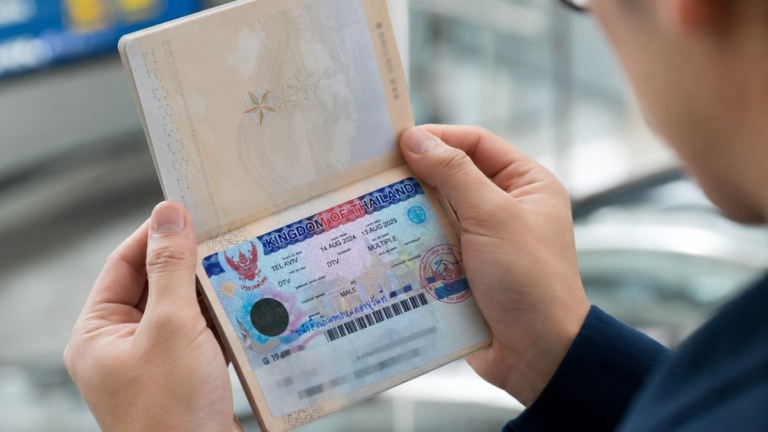
The Destination Thailand Visa is the newest long-term path introduced by the government. It is built specifically for people who work online or want to join long-term cultural activities without necessarily qualifying for higher-threshold programs.
How the DTV Works
- You get a 5-year visa that allows you to enter and leave Thailand as many times as you want.
- Each time you enter the country, you are allowed to stay for up to 180 days.
- You can extend your stay one time per entry for an extra 180 days at a local immigration office for a standard fee of 1,900 THB.

The Two Main Application Types
- The Remote Work Path: This is for digital nomads, online business owners, freelancers, and consultants who serve clients located entirely outside of Thailand. To get approved, you must show a clear employment contract, a remote work confirmation letter from your company, or a verifiable portfolio of freelance projects.
- The Soft Power Path: This is for people who want to move to Thailand to learn a local skill or get medical care. It covers professional Muay Thai training camps, Thai cooking schools, long-term medical treatments, or sports programs. You must provide an official letter of acceptance from a registered school or clinic.
To qualify for either path, you must prove you hold at least 500,000 THB in a personal bank account. In 2026, Thai embassies have become much stricter about this requirement. Officers regularly reject applicants if the money was just moved into the account right before applying, or if the freelance work proof looks vague.
2. Retirement Visas (Non-Immigrant O and O-A)
For individuals who are 50 years old or older, the traditional retirement visa system remains a highly stable option as long as you can meet the financial rules every year. Among the main Thailand long stay visas, this is still one of the most established choices for retirees.
The Two Retirement Methods
- The Non-Immigrant O Retirement Visa: Most applicants apply for this option while they are already inside Thailand. To qualify, you must show that you have 800,000 THB sitting in a Thai bank account for a set number of months before and after your renewal date. Alternatively, you can prove you receive a monthly foreign pension of at least 65,000 THB.
- The Non-Immigrant O-A Long-Stay Visa: You must apply for this visa at a Thai embassy in your home country before you fly to Thailand. It requires the same amount of money but adds a strict rule for comprehensive health insurance that must stay active during your entire stay.
Both of these retirement options strictly forbid you from working locally or running any kind of business in Thailand. You are also required to report your current address to immigration every 90 days and submit a full renewal package every year.
3. The Thailand Privilege Membership Visa

The Thailand Privilege Visa, previously known as the Elite Visa, is a paid membership-based long stay option. If your top priority is absolute convenience and you want to bypass the usual immigration paperwork, the Thailand Privilege Visa allows you to secure long-term stay through a paid membership model.
Membership Choices and Costs
This program offers a long-term, multiple-entry visa attached to luxury airport services and concierge support. The choices depend on how long you want to stay:
- 5-Year Packages: Perfect for individuals looking for immediate entry certainty for a medium-term stay.
- 10-Year and 20-Year Packages: Designed for families and investors who want to make Thailand their primary home for the foreseeable future.
The main benefit of this visa is that it removes almost all standard paperwork. You do not need to show a monthly salary, prove local employment, or keep a large cash deposit in a Thai bank. However, this is strictly a tourist-type visa. You cannot legally accept a local job or operate a domestic business under this program. A person who intends to work for a Thai company, manage local operations, or provide services in Thailand should consider a business visa and work permit structure instead.
The Thailand Privilege Visa can be attractive for high-net-worth individuals, frequent visitors, semi-retirees, internationally mobile families, and foreigners who want Thailand as a long-term base without dealing with more complex eligibility requirements.
4. The Long-Term Resident (LTR) Visa
The Long-Term Resident Visa is a highly selective program meant to attract high-earning professionals, wealthy investors, and specialized experts to Thailand.
The LTR program is administered through Thailand’s Board of Investment. BOI identifies four main categories: Wealthy Global Citizens, Wealthy Pensioners, Work-from-Thailand Professionals, and Highly Skilled Professionals.For those who qualify, the LTR can be one of the most attractive Thailand long stay visas in 2026.
The Four Target Profiles
- Wealthy Global Citizens: People with at least 1 million USD in assets who invest 500,000 USD into Thai property or government bonds.
- Wealthy Pensioners: Retirees aged 50 or older who have a reliable personal income of at least 80,000 USD per year.
- Work-from-Thailand Professionals: High-earning remote workers employed by large international companies with combined revenue in the past 3 financial years of at least 50 million USD.
- Highly-skilled Professionals: Experts and scientists who move to Thailand to work for local companies in specific target sectors like digital technology or green energy.
If you fit one of these groups, the LTR visa offers 10-year validity with 5 + 5 years stay permits, fast-track service at the airport, and removes the normal rule requiring companies to hire four Thai staff members for every one foreigner. Furthermore, highly skilled tech professionals with High-skilled Professional LTR get a special personal income tax rate capped at 17% for income from employment in Thailand. The main downside is that the application process requires intense document screening, making it out of reach for most regular travelers.
5. The Business and Work Visa (Non-Immigrant B)

If your primary goal is to run a local business on the ground, manage a Thai office, or work for a local employer, the Non-Immigrant B Visa paired with a digital work permit is the only lawful option. For anyone working inside the Thai economy, this is one of the most important Thailand long stay visas because it connects immigration status with legal work authorization.
What the Business Path Requires
This visa route is more administrative than the DTV or Thailand Privilege. Setting up a proper business visa requires meeting strict rules:
- Company registration, social security, employment documentation and renewal procedures.
- Capital and Staffing Ratios: For every foreigner a company sponsors, the business must typically have 2 million THB in registered capital and employ four full-time Thai citizens.
- Tax Compliance: The business must actively file monthly corporate taxes, pay local social security for all staff, and submit clean financial audits every single year.
That complexity is not a reason to avoid it. It is a reason to plan correctly.
A founder operating a Thai company should not assume that company ownership alone gives the right to work. A remote worker should not assume that a DTV allows them to serve Thai clients or participate directly in the Thai market. A foreign executive should not enter on a tourist basis and begin local work informally.
For anyone working inside Thailand’s economy, the business visa and work permit route is not just another option. It is usually the correct legal pathway.
Why Border Runs Are No Longer a Serious Long-Stay Plan
Border runs used to be treated by some foreigners as a flexible way to remain in Thailand without committing to a formal visa. That approach is now completely broken.
Thai Immigration officers closely review travel history, frequency of entry, length of stay, and whether a person’s pattern appears consistent with temporary tourism. Long stays also come with strict compliance obligations. Thai Immigration confirms that foreigners staying in Thailand for more than 90 days are subject to strict residence notification requirements.
This does not mean every frequent visitor has a problem. It means that the visa should fit the purpose. A retiree should not look like a tourist forever. A remote worker should not rely indefinitely on visa exemptions. A founder operating a Thai business should not use a visa that does not permit local work. For 2026, the safest planning assumption is simple: if Thailand is becoming your base, choose a visa designed for a long-term presence.
5 Common Mistakes Foreigners Should Avoid

- Relying on visa-free entries: Tighter control of short-stay schemes and the mandatory TDAC system mean the era of flying out for a weekend just to reset a tourist stamp is over.
- Treating the DTV as a local work visa: The DTV is highly useful, but it is strictly limited to foreign-sourced remote work. You cannot use it to take local jobs or sign contracts with Thai clients.
- Working on a retirement visa: Retirement status and local employment activity do not belong together under Thai law and can result in severe penalties.
- Ignoring ongoing compliance: Long-stay foreigners must continuously manage 90-day reporting, address records, and annual renewal timelines. The obligation remains entirely with you.
- Separating visa planning from business planning: For founders and entrepreneurs, immigration status, company setup, tax structures, and work permits must be handled as one single strategy.
Conclusion
The five Thailand long stay visas above each serve a different purpose. The right choice depends on whether you are working remotely, retiring, investing, joining a long-term activity, or operating a business in Thailand.
Siam Visa & Business Law (SVBL) provides clear immigration planning and legal advice for entrepreneurs, remote workers, and families moving to Thailand. If you want to ensure your visa route is completely legal and compliant with the latest 2026 rules, our expert team can guide you through every step. You can schedule a free consultation with us directly here