
Opening a Thai bank account has become one of the most common practical challenges for foreigners planning a long stay in Thailand.
The confusion is understandable. Some people say it is easy. Others say it is nearly impossible. The truth is more precise: opening a Thai bank account now depends heavily on visa status, documentation, local address evidence, and the bank’s compliance review.
This article cuts through the outdated advice to explain exactly how your immigration status controls your financial access, and how to strategically secure a Thailand bank account for foreigners without friction.
The Core Realities of Securing a Thailand Bank Account for Foreigners
The primary driver behind the tightening of local financial access is the Bank of Thailand’s aggressive campaign against financial crime. Working in direct coordination with the Anti-Money Laundering Office (AMLO), the central bank has elevated its fraud detection protocols to eliminate unverified proxy arrangements.
Historically, retail bank branches maintained broad flexibility, frequently allowing arrivals to open savings lines using basic embassy reference letters. In the current environment, financial institutions face severe corporate liabilities and regulatory penalties if an account they host is flagged as a mule entity.
To satisfy these intensified protocols when establishing a Thailand bank account for foreigners, commercial banks now enforce strict identity verification steps at the branch level:
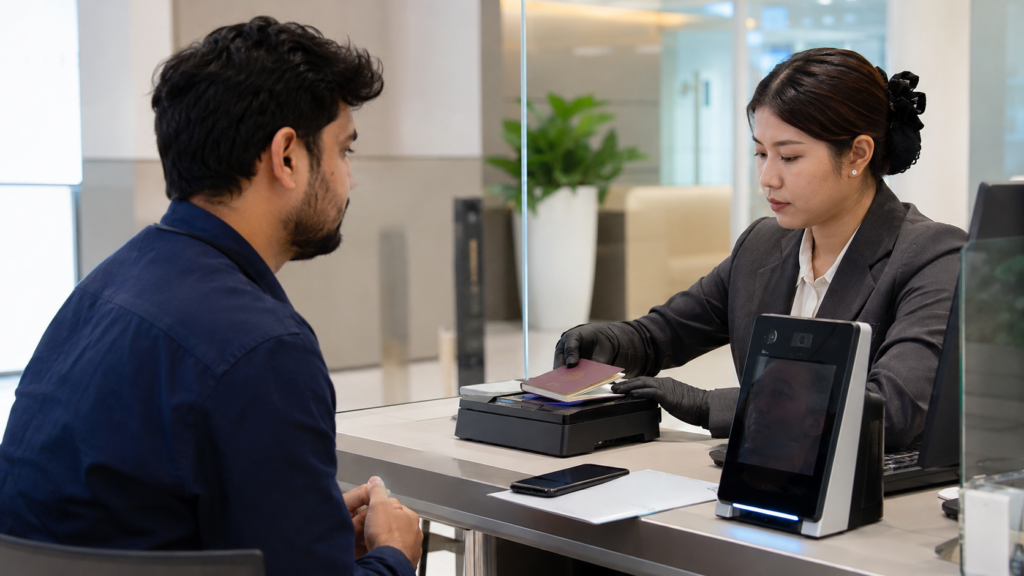
- Mandatory Passport Chip-Reads: Passports must be physically scanned via electronic readers to verify terminal authenticity directly against immigration databases.
- Biometric Face Profiling: Physical face scans are taken on-site to permanently lock the mobile banking application to the verified passport holder, completely eliminating remote or proxy setups.
Because of these rules, front-line managers are restricted from approving accounts for anyone holding a visa class that suggests a temporary or transient stay.
High-Authority Visas That Guarantee Bank Approval
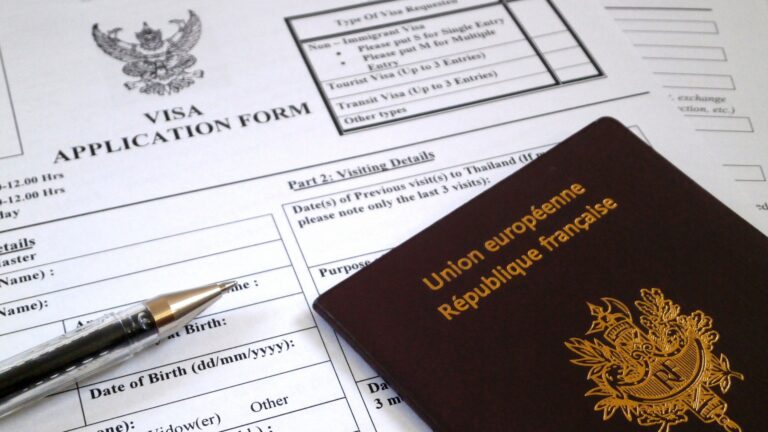
To clear bank compliance screens without friction, your passport must contain an approved, long-term visa class. Major institutions including Bangkok Bank, Kasikornbank, Siam Commercial Bank (SCB), and Krungsri fully recognize five primary categories as credible, long-term resident profiles.
Work and Business Visas (Non-Immigrant B)
This is the gold standard for financial access. Because a Non-Immigrant B visa is supported by a localized employment contract, corporate tax registrations, and a mandatory physical or digital work permit, compliance officers view the applicant as a highly stable corporate profile.
The Long-Term Resident (LTR) Visa
Administered directly through the Board of Investment (BOI), the LTR visa represents a premier track for high-earning professionals, wealthy global citizens, and executives. Once the branch cross-references the mandatory BOI endorsement letter, opening a Thailand bank account for foreigners is highly streamlined, unlocking both local currency accounts and specialized Foreign Currency Deposit (FCD) lines.
The Thailand Privilege Visa
For investors holding premium, state-vetted residencies, banking access is exceptionally smooth. Because members undergo comprehensive pre-arrival background screening by state security agencies, commercial banks extend dedicated concierge lines, allowing checking and savings accounts to be established with minimal secondary documentation.
Retirement and Marriage Visas (Non-Immigrant O / O-A)
Foreign nationals who hold verified retirement status or are legally married to a Thai national are recognized as long-term domestic consumers. To satisfy compliance, banks simply require standard corroborating proof, such as an official marriage certificate or verified proof of long-term fund seasoning from an embassy.
The Destination Thailand Visa (DTV) and Tourist Blind Spot
The most significant compliance trap confronting international remote workers and digital nomads involves the Destination Thailand Visa (DTV).
Because the DTV carries a 5-year multi-entry validity, holders routinely assume it serves as an automatic gateway to opening a Thailand bank account for foreigners. This is a critical strategic error that results in systematic branch rejections.
- The Legal Reality: Under the Immigration Act, the DTV is strictly classified as a tourist entry framework. Compliance teams at major commercial banks process the DTV under standard tourist restrictions rather than resident visa protocols.

Consequently, standard DTV holders walking into a retail branch face immediate refusal. Under current banking rules, a DTV holder can typically only clear compliance hurdles if they possess specialized institutional backing. This requires a formal, legally binding Guarantee Letter issued by an accredited local entity, such as a Ministry of Education-approved training academy or a verified local enterprise. Without this localized institutional link, a DTV entry is treated no differently than a tourist stamp.
Similarly, banks are restricted from opening standard transaction lines if your passport displays any of the following temporary entry methods:
- Standard Tourist Visas
- Visa Exemption Stamps
- Visa on Arrival
The Mandatory Branch Documentary Checklist
Once you hold a compliant visa class, you must assemble a precise documentary packet before visiting a major head branch to finalize a Thailand bank account for foreigners. Preparing incomplete lines will cause an immediate processing halt.
- Primary Passport: Must contain your active, unexpired long-term visa stamp alongside your latest immigration entry slip.
- TM30 Verification: A printout of your formal online immigration address registration, filed by your landlord to confirm your current physical location.
- Traceable Address Proof: A certified long-term residential lease agreement or an official Certificate of Residence issued by Thai Immigration.
- The SIM-Card Linkage Rule: Your Thai mobile phone number must be officially registered with the telecom provider under your exact passport name to pass automated anti-fraud monitoring. If there is a single character mismatch between the SIM card registration and your passport biodata, local commercial mobile banking applications will block activation.
Controlling Large Cross-Border Inflows
For corporate founders, institutional investors, and high-net-worth individuals remitting capital to fund business operations or local investments, incoming asset routing faces intensive central bank oversight.
- The $200,000 USD Remittance Protocol: Under Bank of Thailand regulatory directives, local commercial banks are legally required to scrutinize, hold, and demand explicit source-of-wealth documentation for any incoming cross-border wire transfer equivalent to 200,000 USD or above.
To secure the release of these inflows into a Thailand bank account for foreigners, you must present direct transaction-level evidence to the bank’s compliance division. This includes finalized property purchase contracts, official source-of-income statements, or validated historical corporate registry lines proving the legitimate origin and exact intended destination of the capital.

Securing Your Financial Footprint
Establishing a secure Thailand bank account for foreigners is no longer a casual administrative afterthought; it is a serious compliance process that requires absolute alignment with your underlying immigration status. Relying on transient entry frameworks introduces persistent operational roadblocks that can paralyze your personal or corporate financial timeline.
To evaluate your current visa eligibility and secure a resilient Thailand bank account for foreigners, contact SVBL to schedule a free consultation.