
Thailand’s visa exemption system has changed in ways that many long-stay visitors and remote professionals have not fully absorbed. Two significant shifts have occurred in close succession. In November 2025, the Immigration Bureau introduced coordinated enforcement targeting repeated visa exemption use. Then, effective May 19, 2026, Thailand reduced its standard visa exemption from 60 days back to 30 days for most eligible nationalities.
The result is a materially different entry environment than existed twelve months ago. If your Thailand presence has relied on rolling visa exemption entries, the assumptions you have been operating on are now outdated.
What Is Confirmed and What Is Not Yet in Force
Clarity on the current legal position is essential for anyone making entry decisions right now.
The 30-day reduction is approved but not yet legally effective. Thailand’s Cabinet approved the revision of the 60-day visa exemption scheme on May 19, 2026. The revised entry conditions will apply 15 days after publication in the Royal Gazette. Until the revised measures take effect, current entry conditions remain in place.
As of the date of this article, that publication has not yet occurred. Anyone entering Thailand now is still technically entitled to 60 days under the current exemption. That will change once the Gazette publishes.
What the 30-Day Reduction Actually Does
The Cabinet approved five specific changes to Thailand’s visa exemption framework. The 60-day visa exemption scheme for all 93 countries and territories is revoked. A revised 30-day visa exemption for tourism will apply to 54 countries and territories. A new 15-day visa exemption for tourism will apply to three countries and territories. The Visa on Arrival list is reduced from 31 to four countries and territories. The system moves to a single visa exemption category per country.
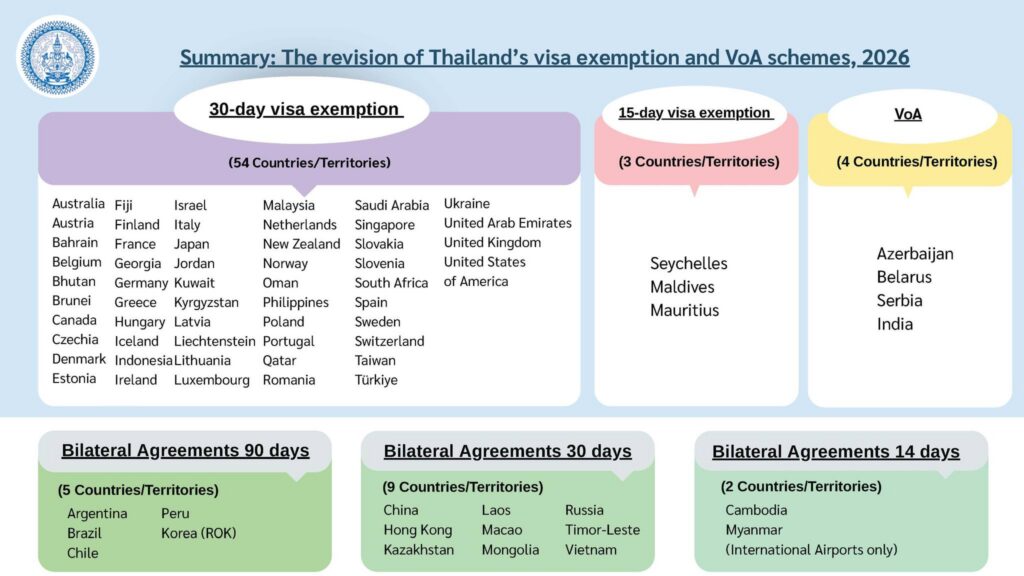
Under the revised system, the 30-day visa exemption will apply only to tourism purposes and can be extended once for another 30 days. Foreigners already in Thailand under existing visa exemptions will be allowed to remain until their approved stay expires.
The stated rationale from Thai authorities encompasses national security concerns, a shift toward quality tourism rather than volume, and the expansion of Thailand’s e-Visa system as the preferred pathway for longer stays. Government data shows most foreign visitors stay in Thailand for an average of around nine days, well below even the original 30-day period. For genuine short-stay tourists, the practical impact is minimal.
For long-stayers and those planning extended stays around the exemption, the reduction materially changes the calculus.
The November 2025 Enforcement Measures: What Changed
Separate from the 30-day reduction, the November 2025 enforcement directives introduced specific operational changes that are already in effect. Thailand’s Immigration Bureau announced new enforcement measures to limit misuse of the visa exemption scheme. They established four key enforcement actions.
First, visa exemption extensions are limited to two per calendar year, foreign nationals entering by land border are strictly capped at two per calendar year. Third, same-day re-entries are not eligible for extensions. Fourth, immigration offices will reject or revoke extensions showing visa-run patterns, with potential deportation for those found in breach.
These measures are directly relevant to those living on the exemption system: travelers who have used visa-exempt entries more than twice without returning to their home country may be denied entry. This measure applies at airports and land borders.
What Immigration Is Actually Looking For
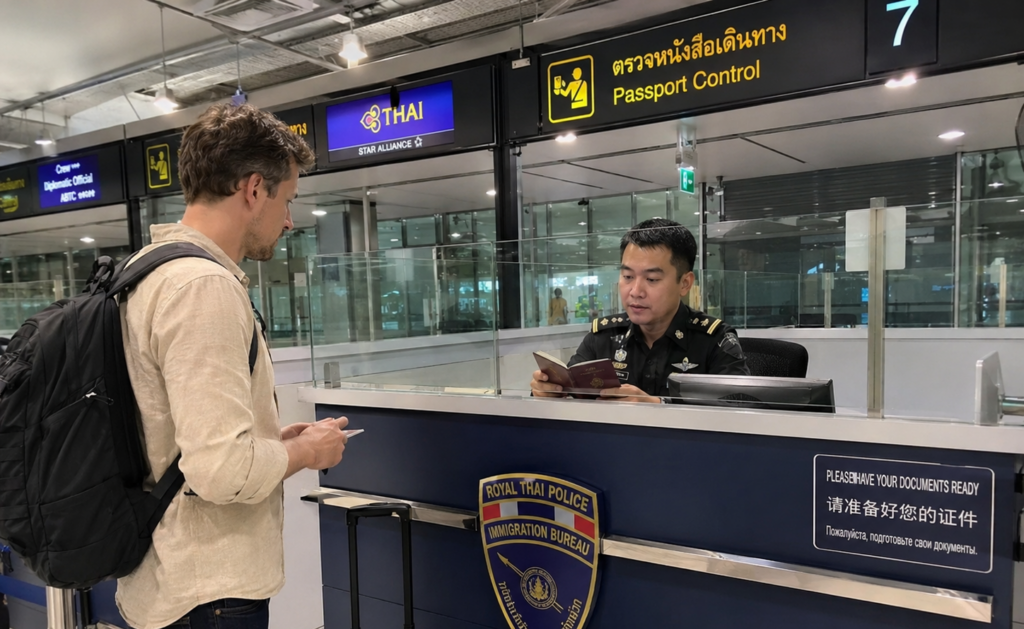
The practical question for anyone entering on a visa exemption is no longer simply whether their nationality is eligible. It is whether their travel pattern, stated purpose, and supporting documentation are consistent with genuine tourism.
Immigration officers review your passport history when you arrive, not just your current calendar year entries. If you have a history of multiple visa exemptions from previous years, officers may ask about your reasons for visiting Thailand, your accommodation plans, and your intentions. Officers exercise discretion when evaluating whether someone is using exemptions appropriately for tourism or inappropriately for long-term stays.
If you are entering as a tourist, be prepared to discuss your itinerary, accommodation, and onward travel. Remote work and online income are sensitive subjects in the context of the visa exemption. Discussing employment in detail can cause officers to doubt whether a tourist entry is appropriate.
The TDAC: A New Layer at the Border
All foreign nationals must now register online for the Thailand Digital Arrival Card (TDAC) within 72 hours prior to arrival. Registration is entirely free via the official Thai immigration portal. The old paper TM6 arrival card is no longer accepted.
The TDAC is not merely an administrative formality. It is a pre-arrival data capture that creates a record against which your border answers are checked. When you complete the TDAC, you provide your intended address, onward travel details, and purpose of visit. That submission is visible to immigration officers when you arrive.
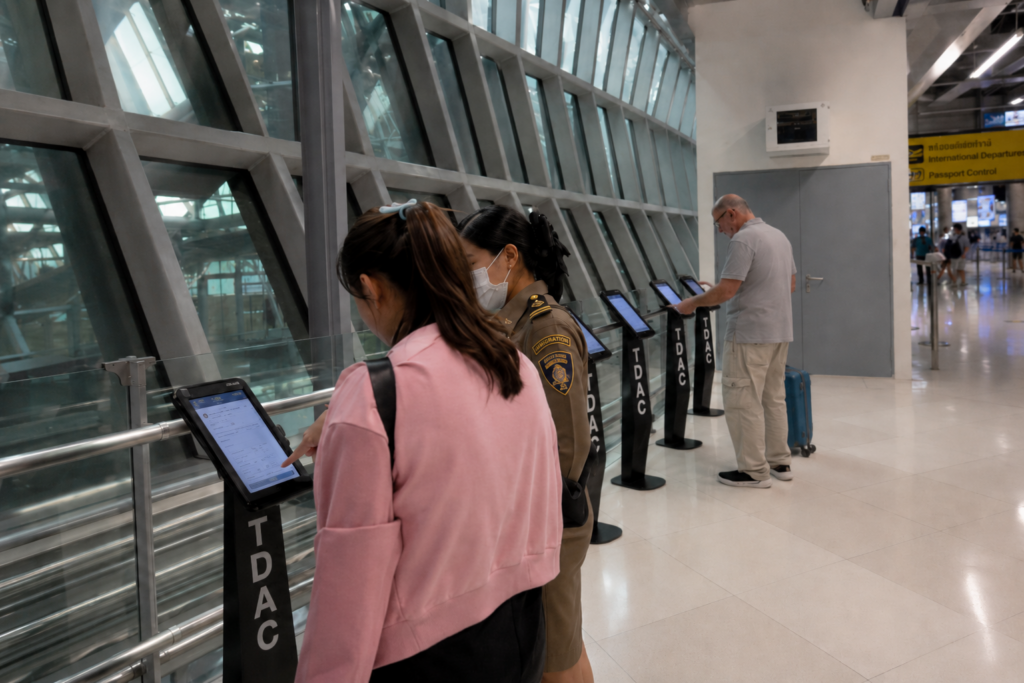
The TDAC QR code is now mandatory for all arrivals by air, land, and sea. Failing to complete it before arrival will create complications at entry, regardless of your visa status or nationality.
For those entering on a visa exemption with a travel history that may attract scrutiny, the TDAC is doubly important. Inconsistencies between your pre-arrival registration and your border answers are the kind of detail that escalates a routine entry into a formal interview.
Who Is Affected and Who Is Not
These enforcement measures are not directed at tourists taking a two-week holiday. Thai authorities have been explicit that the target population is foreign nationals using the exemption system as an informal long-term residency strategy.
The foreign nationals most exposed are:
Remote professionals and digital nomads who have been working from Thailand on consecutive visa exemption entries without a Destination Thailand Visa, work permit, or appropriate long-term authorization. The Immigration Bureau has specifically named this group in its communications.
Serial border-runners whose passport history shows repeated 60-day stays separated only by short exits to neighboring countries. This pattern is now the defining characteristic of what immigration describes as misuse.
Business visitors attending repeated meetings or conducting extended commercial activity under tourist entries without Non-Immigrant B visa authorization.
Anyone with multiple exemption entries whose overall travel history suggests permanent residence rather than periodic tourism, regardless of whether any single entry was technically compliant.
Genuine short-stay tourists, those traveling for conferences with return flights, and those holding proper long-term visas such as LTR, DTV, Non-Immigrant B, or retirement visas are not the target of these measures and are not materially affected by them.
What Assumptions Are No Longer Valid
Several assumptions that were operationally reasonable in 2024 have been overtaken by both enforcement policy and Cabinet decision.
The assumption that consecutive 60-day exemption entries with short border exits constitute an acceptable long-term strategy is now clearly incorrect under the November 2025 directives, and will become even less viable once the 30-day reduction takes effect.
The assumption that visa extension requests are routine is wrong. Extensions now require an in-person immigration office visit, payment of the standard fee, and an explanation of purpose. Provincial offices are now instructed to decline extensions where visa-run patterns are evident.
The assumption that entry history resets annually is also wrong. Thailand’s immigration system keeps records of previous entries. Officers may look at your overall travel pattern, especially if you spend long periods in Thailand across multiple years.
What Legitimate Pathways Exist

Thailand has not signaled any intention to reduce its attractiveness to foreign professionals, investors, or long-stay residents. It has made clear that long-term foreign presence requires a structured legal pathway rather than an improvised use of the tourist exemption system.
The Destination Thailand Visa (DTV) provides a five-year visa allowing stays of up to 180 days per entry for remote professionals and digital nomads who can demonstrate income from outside Thailand. It is the most directly relevant alternative for the group most affected by current enforcement.
The Long-Term Resident (LTR) Visa is Thailand’s premium long-stay pathway for high-income earners, skilled professionals, retirees, and investors meeting defined criteria. It carries significant immigration and tax privileges and represents the most legally durable long-term option available.
The Non-Immigrant B Visa with an appropriate work permit remains the correct pathway for foreign nationals employed in Thailand or providing services to Thai entities.
The Non-Immigrant O-A Retirement Visa serves foreign nationals aged 50 and above who meet the applicable financial and insurance requirements.
Each of these pathways involves upfront compliance work that the visa exemption route avoids. That compliance investment is now substantially lower in cost and risk than continued reliance on a system that is actively being enforced against.
Monitoring Requirement: Royal Gazette Publication
For anyone making forward planning decisions, one item requires ongoing monitoring. The 30-day reduction approved by Cabinet on May 19, 2026, is not yet in effect. The new visa-free terms will take effect 15 calendar days after publication in Thailand’s Royal Gazette. Until that publication occurs, the 60-day exemption remains legally in force.
Once published, the effective date will be calculable. Anyone currently in Thailand on a 60-day stamp issued before that date will retain their full permitted stay. Anyone entering after the effective date will receive 30 days.
The Strategic Reality
If your current Thailand presence relies on visa exemption entries, and particularly if your passport history shows a pattern that the Immigration Bureau now treats as a risk indicator, that is a situation that warrants a structured review before your next entry.
The consequences of an entry denial are not limited to the inconvenience of being turned away. Depending on the circumstances, they can include deportation at personal expense and restrictions on future entry.
SVBL advises foreign nationals, remote professionals, digital nomads, and long-stay residents on visa strategy, compliance positioning, and transition to appropriate long-term visa structures. We assess your specific entry history, income profile, and objectives to identify the correct pathway and establish it on sound legal footing.
Contact SVBL for a visa strategy consultation before your current arrangement becomes a border problem.