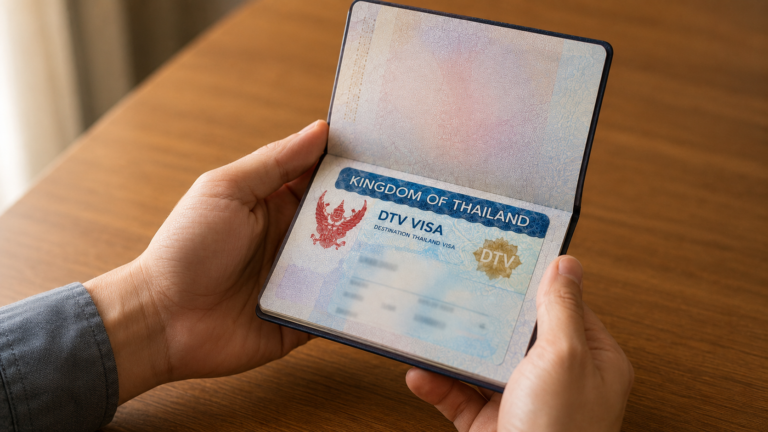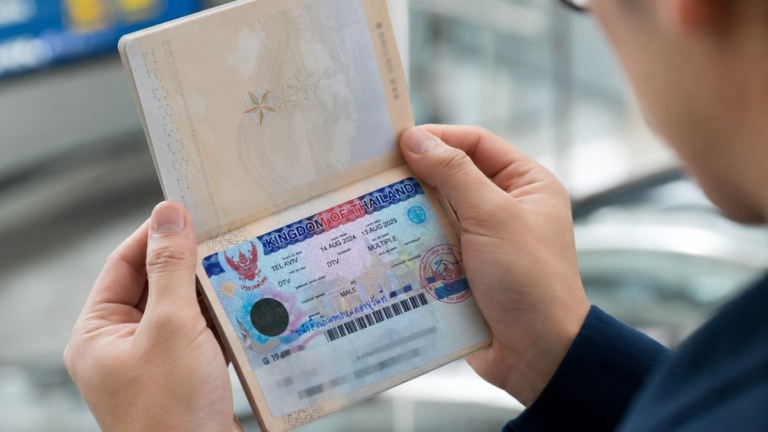

A Foreign Business License (FBL) is Thailand’s formal permission that allows a foreign-owned company to carry out a restricted activity under the Foreign Business Act (FBA). It is not a company type; it is a licence layered onto your Thai entity most commonly a private limited company to make a specific, listed activity lawful.
This guide sets out when an FBL is required, how it differs from BOI promotion (including the Foreign Business Certificate that BOI issues for the promoted scope), the capital and documentation reviewers expect, and the common pitfalls that slow approvals.
What is a Foreign Business License (FBL)?
Under the FBA, many service and trading activities are classified as restricted for foreigners. An FBL is the instrument the Ministry of Commerce uses to allow a foreign-owned entity (often a Thai private limited company) to lawfully operate a restricted activity. The license is granted for defined scope; it does not convert your business into a different structure, and it does not carry tax holidays or immigration perks. It is legal permission to trade, nothing less and nothing more.
FBL vs. BOI: choosing the right path
Think of BOI and FBL as two different gateways:
- BOI promotion is appropriate if your activity falls within a promoted group and you can demonstrate national benefit (technology, skills transfer, regional development, exports, or similar). BOI may award tax incentives, operational facilitation, and a Foreign Business Certificate for the promoted scope, which functions as permission to operate that otherwise-restricted activity.
- FBL is appropriate where your activity is restricted but not BOI-promoted, or you do not meet BOI’s merit criteria. It delivers legal permission and foreign majority control for the licensed scope without BOI tax/non-tax incentives.
Many projects model both routes: if BOI is viable, the total package (scope permission + incentives) is usually superior. If not, the FBL is the clean, compliant way to proceed.
Types of business activities: Lists 1–3
There are 3 types of business activities provided for under the Foreign Business Act:
List 1: Business Not Permitted to Foreigners
The following businesses are not permissible to foreigners, in its strict sense, by special reason:
- The press, radio broadcasting station or radio and television station business;
- Rice farming, plantation or crop growing;
- Livestock farming;
- Forestry and timber processing from a natural forest;
- Fishery, only in respect of the catchment of aquatic animals in Thai waters and specific economic zones of Thailand;
- Extraction of Thai medicinal herbs;
- Trading and auction sale objects or objects of the historical value of Thailand;
- Making or casting Buddha images and monk alms-bowls; and
- Land trading.
List 2: Business Permitted to Foreigners under Conditions
Section 15 of the FBA provides that a foreigner which is a juristic person may operate any business specified in List Two only with ministerial permission approved by the Cabinet, and with Thai shareholding of not less than 40% (which may be reduced to not less than 25% by special approval), and with at least two-fifths of the directors being Thai.
Business activities fall under List Two are those businesses related to national safety or security or having an impact on arts, culture, traditions, customs and folklore handicrafts or natural resources and the environment.
List 3: Thais Not Yet Ready to Compete (Typical FBL Domain)
Foreigners may operate only with an FBL (filed at DBD; reviewed by the Foreign Business Committee). Headline activities include:
- Rice milling; flour from rice/economic plants
- Fishery (hatching/raising); forestry from grown forests
- Production of plywood, veneer, chipboard, hardboard
- Professional services: accounting; legal; architectural; engineering
- Construction (with exceptions, e.g., special-tech infrastructure THB 500m foreign capital)
- Broker/agent (with specified exceptions, including securities/futures; intra-group procurement; international-trade distribution with THB 100m foreign capital)
- Auction (with international-bidding exceptions)
- Internal trade in traditional agricultural products
- Retail below THB 100m total capital or below THB 20m per shop
- Wholesale below THB 100m per outlet
- Advertising; hotel (except hotel management); guided touring; sale of food & beverages; plant varieties cultivation/propagation; “other services” unless specifically exempted

Based on the above definition, if the majority of the shares of a limited company are held by Thais, it is regarded as a Thai company and thus not subject to this Act. This means that foreigners are generally allowed to hold up to 49% in a company engaged in restricted businesses. Beyond that, the approval requirement must be complied with. Strictly speaking, the majority of foreign shareholders in any company is required to apply for the Foreign Business License (FBL) if it engages in a restricted business (or obtain a Foreign Business Certificate under BOI promotion for the promoted scope, or qualify under a treaty such as the U.S.–Thailand Treaty of Amity).
The minimum capital requirement for foreigners is two million baht in general, and three million baht per restricted business when licensing under the FBA.
There are some exemptions that allow the foreigner to set up business in Thailand where the majority of the owners are foreigners. The Thailand-United States Treaty of Amity is one such exemption. Under this treaty, the majority of shares and directors have to be U.S. citizens to enjoy the exemption from FBL (note: treaty eligibility is subject to defined exceptions activities on List 1 remain prohibited).
Similar to the Thailand-United States Treaty of Amity, the Thailand Board of Investment (BOI) is another exemption which might allow foreigners to operate their businesses in Thailand by holding the majority of shares. Foreign investors may hold a majority or all shares in a promoted project depending on the BOI consideration. A BOI-promoted company receives a Foreign Business Certificate (FBC) under FBA Section 12 for the promoted scope only; any non-promoted activities remain subject to the FBA (and may still require an FBL).
How to Apply for a Foreign Business License (FBL) in Thailand
Foreigners wishing to engage in businesses indicated in List 2 or List 3 of the Foreign Business Act in Thailand need to obtain a “Foreign Business License” from the relevant authorities before starting their business operations. (Process note: List 3 typically proceeds via an FBL application; List 2 requires ministerial permission with Cabinet approval and Thai participation conditions as set out above.)
An application should be filed with the Department of Business Development (DBD) at the Ministry of Commerce, which will be reviewed by the Cabinet (for List 2 cases) or the Foreign Business Committee (for List 3), as the case may be. Various criteria are used to consider the impact of the proposed business operation, such as the advantages and disadvantages to the nation’s safety and security, economic and social development, size of the enterprise, local employment, etc. Approval of business license application is more likely when the authorities view the business as providing significantly more benefits and protect and promote Thai interests.
Timelines and outcomes depend on completeness and the strength of the Thai-benefit case; many investors also evaluate the BOI route first when eligible because it can combine scope permission (via FBC) with incentives.
What Strong Applications Include
The FBL reviewer looks at substance, solvency, and benefit to Thailand. In practice, you should be prepared to show:
- Adequate capital for the first phase of operations. Practitioners plan around statutory minimums and the project’s first-three-year operating costs; under-capitalised applications stall.
- A clean ownership and control diagram: who the shareholders are, how control is exercised, and who the responsible directors are in Thailand.
- Premises suitable for the activity (registered address; if inspections are likely, an inspectable office).
- A Thai employment and skills plan proportional to your scope, with clear training or transfer elements where relevant.
- Where applicable, sector licences (e.g., logistics, food, regulated services) aligned to the activity you describe.
None of this turns your company into a different structure; it evidences that your existing Thai entity can safely and legitimately carry on the activity you are asking to license.
Common friction points (and how to avoid them)
- Activity mis-match. If your description doesn’t line up with the FBA wording, you invite queries. Anchor your scope to the exact phrase used in the list item.
- Thin capitalisation. Plan credible paid-up capital and show the timeline for injection; don’t leave it to inference.
- Nominee risk. Do not attempt nominee arrangements. They are unlawful and jeopardise both licensing and immigration.
- Leases and inspections. Choose premises that meet registration and inspection standards; “virtual” solutions rarely satisfy a restricted-activity file.
- Ignoring the BOI alternative. If your activity has a BOI-promoted equivalent, model it first, the opportunity cost of skipping incentives can be material.

How the FBL Fits Your Company Structure
Your company structure does the heavy lifting most often a Thai private limited company with two or more shareholders. The FBL sits on top to legalise the restricted scope for a foreign-owned entity. If you later expand activities, you may need to amend scope or add permissions. If you pivot to a BOI-eligible line, you can pursue promotion for the new scope and operate it under the BOI certificate while retaining the FBL for the non-promoted line, each permission tied to its activity.
Next Step? Talk to SVBL
If your activity is restricted and BOI is not the right fit, an FBL is the straightforward, compliant path to foreign majority ownership. If BOI is viable, evaluate that route first, the incentives and immigration facilitation can reshape your cost base and hiring plan.
SVBL can help. We assess your activity under the FBA, model the FBL vs BOI decision, prepare the narrative and evidence, file with the DBD, and manage clarifications through to decision, then keep you compliant post-approval. If you’re still choosing a legal vehicle, start with Thai Company Structures and we’ll align the licensing path to your structure.
Speak to our team to map your options and move forward with confidence.