The biggest misconception surrounding Thailand visa free update is that the country is simply cutting visa-free stays from 60 days to 30 days for everyone.
That assumption is already shaping travel plans, accommodation bookings and decisions about whether a visa is needed. For travellers intending to stay longer than a short holiday, relying on it could create problems before they even arrive.
The actual position is more complicated than the headline suggests, and several details will determine how the changes affect each traveller. This article explains what the new framework actually changes, when it will begin and what travellers should check before relying on visa-free entry.
What Has Thailand's Cabinet Approved?
In July 2026, the Cabinet approved updated entry categories intended to replace the 60-day visa-exemption scheme introduced in 2024.
The current scheme covers 93 countries and territories. The replacement framework will narrow this into nationality-specific categories, with travellers assigned to a 30-day visa exemption, a 15-day visa exemption or Visa on Arrival.
The government has presented this as more than an administrative adjustment. Its stated objectives include improving immigration screening, removing overlapping privileges and reducing the use of visa exemptions for activities that do not match the traveller’s stated purpose of entry.
Which Countries Get 30 Days Visa Free?
Under the revised Thailand visa free rules, nationals of 59 countries and territories qualify for the 30-day visa exemption. That group includes all 27 European Union member states, along with India, Bulgaria, Croatia, Cyprus, and Malta. India moves from Visa on Arrival into this 30-day category under the new rules. The addition of Bulgaria, Croatia, Cyprus, and Malta means every EU member state now falls under identical 30-day terms.
The reduction to 30 days does not apply universally. Mauritius and Seychelles will receive visa-exempt entry for up to 15 days. Azerbaijan, Belarus, and Serbia move into the Visa on Arrival category instead. Separate bilateral arrangements continue to apply where relevant, offering stays of 14, 30, or 90 days depending on nationality and the specific agreement.
Are the New Visa Free Rules Currently in Effect?
The revised entry categories are not yet in force. Five related Ministry of Interior announcements must first be published in the Royal Gazette and will take effect 15 days after publication. Until that process is completed, the existing entry framework remains operational.
So if an eligible traveler is admitted for 60 days before the change takes effect, that traveler may remain for the balance of the stay already granted. The permitted period will not be reduced automatically because the new framework begins after entry.
Do TDAC and THIM Affect My Visa Status?
No. TDAC (Thailand Digital Arrival Card) and THIM (Thailand Immigration Management app) are registration tools, not visa mechanisms and they don’t change how the Thailand visa free rules apply to you.
TDAC is a required electronic arrival registration covering passport, journey, accommodation, travel purpose, and health information. It must be submitted within the three days before arrival, including arrival day. Thailand has also introduced pilot access to the Thailand Immigration Management application, known as THIM.
THIM provides a mobile route for TDAC-linked registration. It can read passport information from an image, record travel and accommodation details and support group submissions for up to ten travellers.
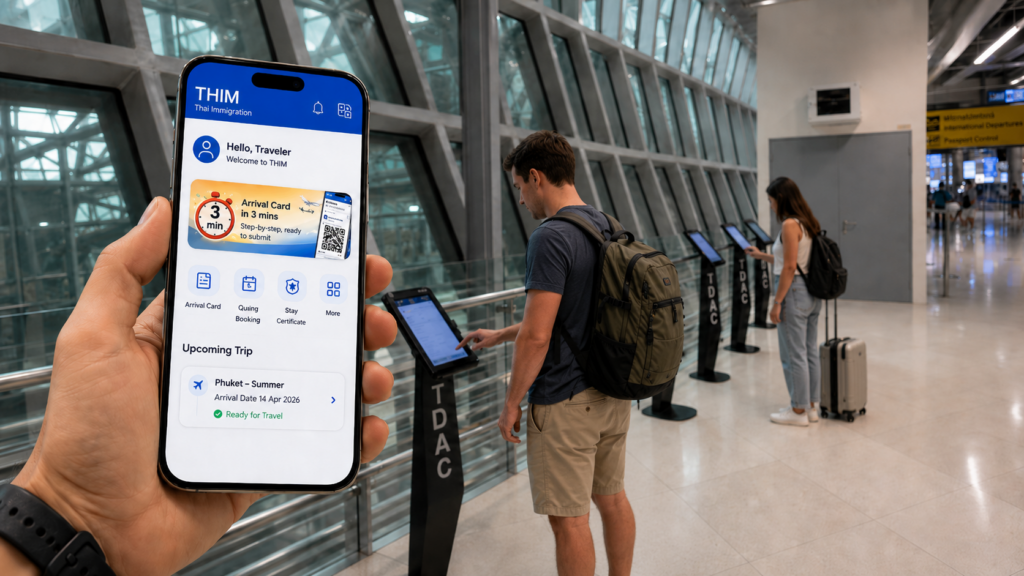
Neither TDAC nor THIM grants permission to enter, increases the length of stay or replaces the need for the correct visa. Completing digital registration does not resolve an immigration strategy that is unsuitable for the traveller’s actual duration or purpose.
Will a 30-Day Visa Free Stay Be Extendable?
Thailand’s Cabinet has approved the entry periods but has not confirmed extension procedures under the new visa free rules. An extension is an application subject to immigration discretion not an automatic entitlement attached to every visa-exempt entry.
Travellers should therefore avoid planning a 60-day stay on the assumption that an initial 30-day admission will always be extended for another 30 days.
The final procedure may introduce specific eligibility requirements, supporting documents, permitted activities and local administrative processes. Until those details are published, eligibility to submit an application should not be confused with certainty that a longer stay will be approved. Where a trip cannot reasonably be shortened, obtaining an appropriate visa before departure is the more reliable approach.
What This Means for Travellers
Thailand’s proposed visa free changes are not a universal reduction from 60 visa-free days to 30.
The period available will depend on the traveller’s nationality, the rules in effect on the date of arrival and any separate agreement applying to the passport being used.
Anyone planning a stay beyond the confirmed visa-free period should avoid relying on an unconfirmed extension. SVBL assists foreign nationals in assessing visa eligibility, comparing appropriate pathways and identifying immigration risks before travel commitments are made. Book a free consultation before committing to flights, accommodation or a long-term travel plan.